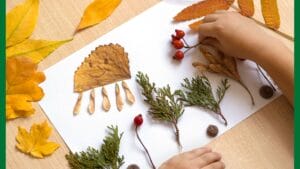
Need something easy to do right now for the next 20 minutes, without a lot of prep, supplies, or rules? Fall might be the easiest season of the year for exactly that.
Leaves, acorns, and pine cones make free craft supplies, and nature is busy getting ready for winter right where kids can see it all. At Ranger Rick, we’ve spent 60 years helping families notice the wild world around them, so we gathered our favorite fall activities for kids in one place: ideas for after school and after dark, crafts, snacks, books, printables, and a 20-minute nature walk to see what the season is up to.
On this page
- Activities for after school
- Activities for after dark
- Crafts
- Snacks
- Books
- Videos, quizzes, and printables
- 20-minute nature walk
Easy fall activities for after school
These activities are quick, low-prep, and work for a range of ages, so a preschooler and an older sibling can do them side by side. Most need nothing more than what’s already in your house, or on the sidewalk.
Play fall nature bingo
Want a game you can start in two minutes? Draw a four-by-four grid and fill each square with something to spot outside. The first player to find four in a row wins. There’s no collecting involved: just spot it and check it off. Here’s a quick fall card to get you started, or print a ready-made one from Nature Bingo on the Ranger Rick kids’ site.
Fall Nature Bingo
- Acorn
- Red leaf
- Squirrel
- Spider web
- Pine cone
- Mushroom
- Bird on a wire
- Seed with wings
- Bare branch with a nest
- Yellow leaf
- Puddle
- Fuzzy caterpillar
- Pigeon or crow
- Something chewed
- Cloud shaped like an animal
- A bug on a leaf
Fall activities for after school
See all outdoor activities-

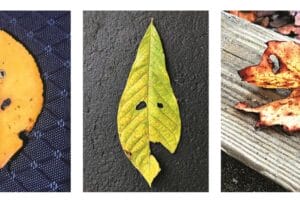
Make Leaf Litter Critters
Hunt for leaves that seem to have faces, snap a photo, then doodle on it to bring each critter to life.
-
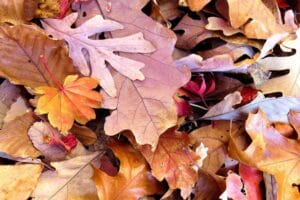
Leaf Memory Game
Match pairs of real leaves in a classic memory game.
-
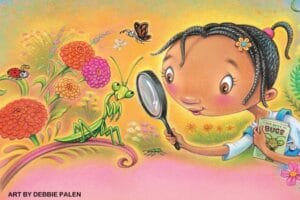
A Backyard Bug Hunt
Get up close with helpful insects. Spend a few minutes at each spot, and use a phone camera as a magnifier.
-
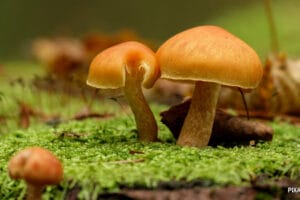
A Mushroom Walk
Search for fungi a few days after a good rain. Look, but don’t touch.
Ranger Rick Tip: Heading out on the Backyard Bug Hunt? On a sunny fall afternoon, check the warm south- or west-facing wall of a building. You may find a crowd of boxelder bugs, black insects with red markings that are native to North America. They’re soaking up the heat before tucking into cracks for the winter. They don’t bite, so kids can watch up close.
What can kids do outside after dark?
When it gets dark before dinner, it can feel like the day is over. But the dark has its own wildlife to watch!
Try this: hold a flashlight right beside your eyes and slowly sweep the beam across a lawn. See those tiny blue-green sparkles? Many of them are wolf spiders’ eyes, reflecting the light back at you.
Fall activities for after dark
See all activities-
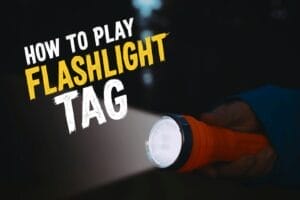
Flashlight Tag
A classic nighttime game for three or more players. All you need is one flashlight.
-
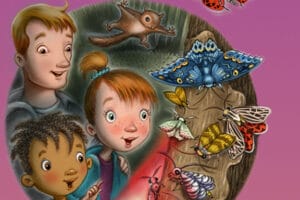
Calling All Moths!
Paint a sweet banana mix on a tree at sunset, then come back after dark to meet your visitors.
-
Glowing Balloon Ghosts
A glow stick, a white balloon, and a marker are all it takes. Ready in about 15 minutes.
-
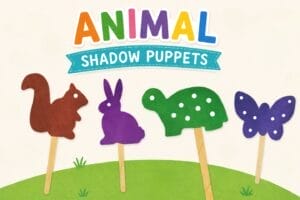
Animal Shadow Puppets
Put on a wildlife show with free printable templates, a flashlight, and a blank wall.

Fall crafts from leaves and pine cones
Fall doles out free craft supplies every day. Bring a bag on your next walk and collect leaves, pine cones, acorns, and twigs.
Take just a handful of leaves, though, and leave the rest where they fell or rake them into a garden bed. Fallen leaves give moths, butterflies, and woolly bear caterpillars a cozy place to spend the winter (and that means more insects to find next spring).
Fall crafts for kids
See all crafts-
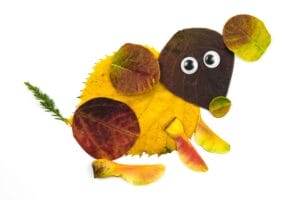
Leaf Animals
Press leaves overnight, then turn them into mice, turtles, and turkeys.
-
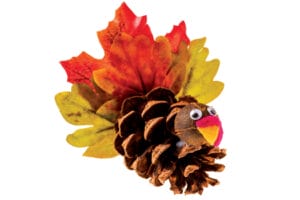
Pine Cone Turkey
Build a turkey from a pine cone, a few bright leaves, and an acorn in about 20 minutes.
-
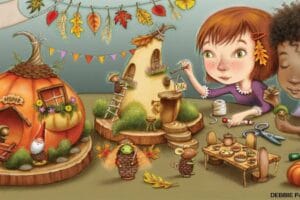
Pumpkin Fairy House
Decorate a pumpkin with twigs, acorns, and moss. No carving needed!
-
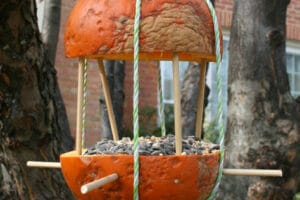
Recycled Pumpkin Bird Feeder
When you’re done decorating, turn your pumpkin into a feeder for hungry birds.
Ranger Rick Tip: Before you start crafting, drop an open pine cone into a cup of water. Within a couple of hours, its scales close up tight. Let it dry, and over a day or two it opens again. It’s a fun bit of nature science for the kitchen table.
Fall snacks kids can help make
Animal-inspired snacks are an easy way to bring the season into the kitchen. Be ready for a little mess. That’s usually the part kids love most!
Fall snacks and recipes
See all recipes-
Bear Paw Cookies
No-bake chocolate oat cookies with almond claws. Nut-free swaps included.
-
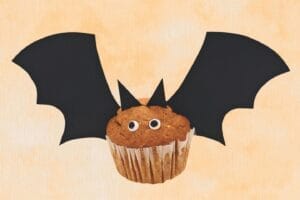
Bat Muffins
Pumpkin muffins with paper bat wings (just remove them before eating!).
-
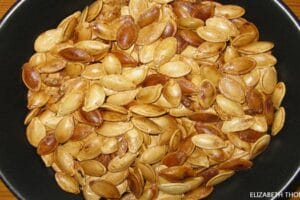
Roasted Pumpkin Seeds
Save the seeds when you carve your pumpkin.
-
Homemade Applesauce
Kids can help with every step except the stove in this simple, four-ingredient recipe.


What should we read together this fall?
Fall reading works best when it matches what’s happening outside the window. Read about an animal together tonight, then go look for it tomorrow.
-
Then find itBats chasing insects around a streetlight on a mild October evening
-
Then find itA deer in its new grayish brown winter coat
-
Then find itA dead tree with woodpecker holes in a park or along a trail
-
Then find itCoyote tracks in park mud: a neat, nearly straight line
These animal articles are kid friendly. If your children are pre-readers, you can read the articles aloud to them. For more wildlife books for every reading level, check out Fall Reading: Ranger Rick Books for Ages 7+ and Beginner Readers: Ranger Rick Books for Ages 4+. Your local library is a great place to find more.
Fall videos, quizzes, and printables for kids
Need a rainy-day plan? Everything here is free on the Ranger Rick kids’ site: a video to move along with, a quiz to play together, a story to read, and printables to keep by the window.
Watch, play, read, and print
Visit the kids’ site-
Watch: Climb Like a Goat
Get up and move with a Ranger Rick dance-along, then pick another wildlife video to watch together.
-
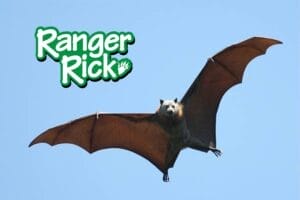
Play: Go Batty! Bat Quiz
A quick quiz to play together on any screen. Then read Flying Foxes and see how many bat facts you already know.
-
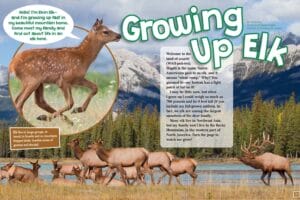
Read: Growing Up Elk
Meet Elvin Elk and find out why bull elk bugle every fall.
-
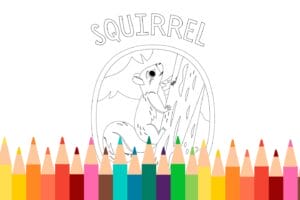
Print: Squirrel Coloring Page
Color a squirrel, then head outside to watch a real one bury its nuts.

- Look Out For Mushrooms: a look-only spotting sheet for ages 7 and up.
- Backyard Birds Checklist: hang it by the window and check off birds as they visit.
- Free Printable: Lunch Box Nature Notes for Kids: little nature notes to tuck into a lunch box.
- Ranger Rick coloring pages: including a chipmunk, deer, owl, goose, and moth.
20-minute nature walk: what to see this season
Fall is a good time to see wildlife, because so many animals are out in the open getting ready for winter. You don’t need a long hike. A walk around the block, a bench in the park, or even a window with a view is plenty.
Fall arrives earlier in the North and the mountains and later in the South, so start with the part of the season that matches your weather.
Jump to: Early fall · Mid fall
Early fall
Look for: leaves changing color, birds on the move, and squirrels burying nuts.
Why fall leaves change color
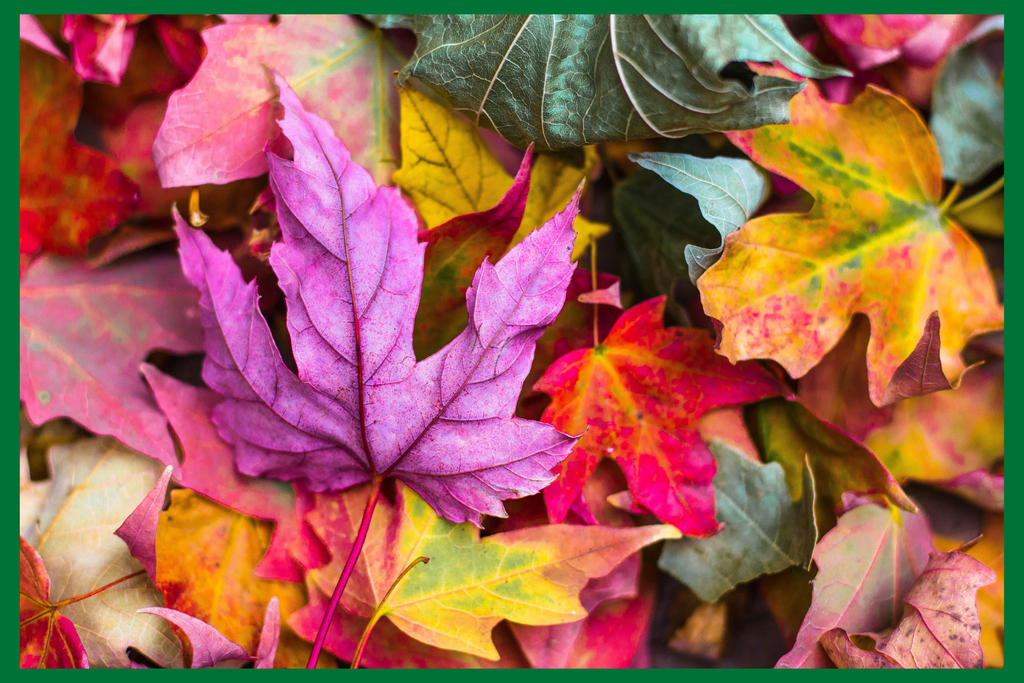
The yellow and orange in fall leaves were there all summer, hidden under green chlorophyll. As the days get shorter, the green fades and the other colors finally show. Reds are different. Maples, sumacs, and dogwoods make brand-new red pigment each fall, and sunny days with cool nights make the reds even brighter.
No yard? Find a ginkgo tree in your neighborhood. Ginkgos often drop all their leaves in a single day after a cold night, so kids can keep watch and try to guess the day.
Birds on the move
Most migrating birds travel at night, so a lot of the action happens overhead while we sleep. In early fall, juncos and sparrows arrive, hawks ride ridges and coastlines south, and monarch butterflies stream through Texas.
From a window: on a calm night, open a window and listen for soft chirps overhead. That’s birds calling to each other as they fly. Cornell Lab’s BirdCast forecasts the biggest migration nights for your area.
Squirrels burying the winter
Gray squirrels bury nuts one at a time and use landmarks to find them later. Watch one for a few minutes and you might catch it pretending to bury a nut, patting the dirt flat, then running off with the nut still in its mouth! Researchers at Wilkes University found that squirrels fake more burials when they think their stash might get stolen.
Mid fall
Look for: empty nests in bare trees, winter birds settling in, and animals getting ready for the cold.
Nests you couldn’t see before
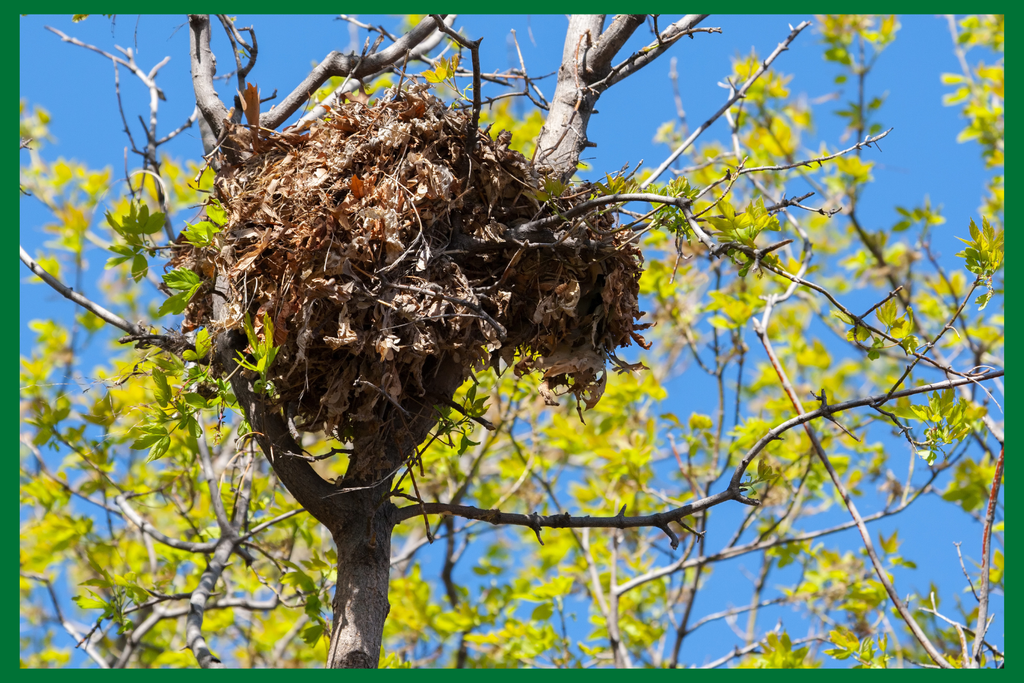
Once the leaves fall, the trees reveal what they were hiding all summer: bird nests, leafy squirrel nests (called dreys), and papery wasp nests. Most of the bird nests are empty by now, but a drey might still have a squirrel curled up inside on a cold day. It’s fun to count them, but leave bird nests where they are. Taking the nest of most native birds is against federal law, even when it’s empty.
Winter birds moving in
Juncos and white-throated sparrows hop through fallen leaves, kicking them aside to find seeds underneath. On ponds and lakes, look for ducks and geese gathering in flocks. Birds are settling into their winter routines now, which makes it a great time to put up a feeder. A small one works on a balcony railing, and the Milk Jug Bird Feeder shows how to make one from recycled materials.
Animals getting ready
Black bears spend late summer and fall eating almost nonstop, as many as 20,000 calories a day, to build up the fat they’ll live on through the winter. Most families won’t spot one, but if you live in bear country, that hunger is why wildlife officials ask you to take down bird feeders while bears are active.
Chipmunks start heading underground about now. They don’t sleep straight through winter, though. Every so often they wake up for a snack from their stash.
Fall where you live
Fall looks different across the country. Here are some special moments to watch for in different regions:
- Pacific Northwest: From late summer into November, salmon swim home from the ocean to lay their eggs. At Seattle’s Ballard Locks, families can watch them through underwater windows at the fish ladder. Stay out of the streams, though, since wading can crush salmon nests.
- California coast: From mid-October to mid-February, western monarch butterflies cluster together in coastal groves like Pacific Grove and Natural Bridges State Beach. Look without touching, and stay on the paths.
- Desert Southwest: Sandhill cranes start arriving at places like Bosque del Apache National Wildlife Refuge in New Mexico in late October. Listen for their rattling calls, which can carry more than two miles!
- Great Plains: In late fall, Loess Bluffs National Wildlife Refuge in northwest Missouri can fill with up to a million snow geese, plus huge flocks of ducks. Some years, hundreds of bald eagles show up too.
- Great Lakes: From mid-September to late October, thousands of hawks and eagles soar past Hawk Ridge in Duluth, Minnesota. On one September day in 2023, more than 4,600 broad-winged hawks flew over! The overlook is free, and 10 a.m. to 2 p.m. is the best time to look up.
- New England: Fall is moose season. Moose wander more during their fall breeding season, so families have a better chance of spotting one, especially where young forest meets ponds and wetlands. Bring binoculars, and if a moose notices you, slowly back away.
- Mid-Atlantic coast: In September and early October, monarch butterflies heading south gather at Cape May, New Jersey. They rest and sip nectar at the tip of the peninsula until the wind is right for crossing the water.
- Southern Appalachians: Elk in the East? Yes! In Great Smoky Mountains National Park, elk gather in open fields for their fall breeding season in September and October. Watch from the roadside at Cataloochee or near the Oconaluftee Visitor Center, and stay at least 50 yards away.
- Florida: From about mid-November through March, manatees gather in warm springs. Boardwalks, like the one at Blue Spring State Park, let families watch from above.
Ranger Rick Tip: Pick one window and one time of day, and check in every week through December. Your child will get to see the season change little by little, something one big hike can’t show. Keep a notebook nearby for sketches. How to Keep a Nature Notebook has tips for getting started. Even a few minutes outside every day adds up. For more simple ideas, try the National Wildlife Federation’s Green Hour®.


