

Capybaras
By Anne CisselLife for these mammals is all about friends, family, and water.
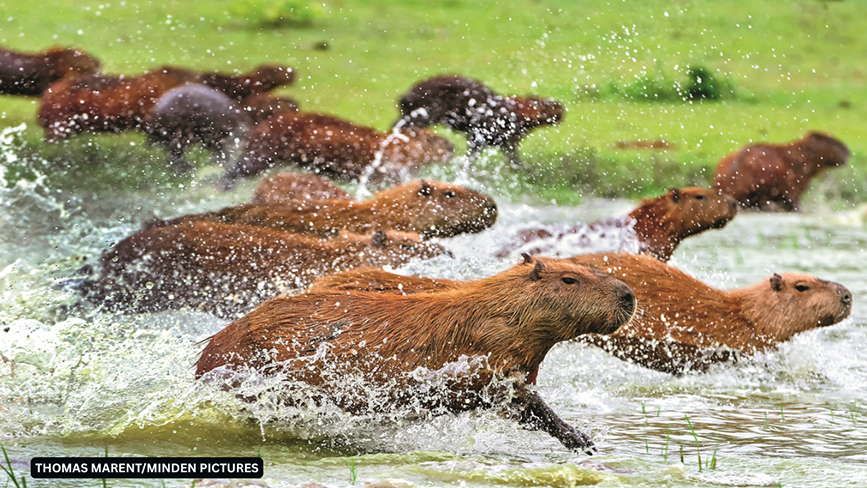
The animals here are making a big splash. That’s because they’re BIG rodents—the largest in the world. They’re called capybaras, and each one may be as heavy as a German shepherd dog!
Capybaras live near the lakes, rivers, and swamps of South America and parts of Central America. Sometimes people call them “water pigs” because they are always in or near water—and they are shaped sort of like pigs. But they aren’t related to them. In fact, they’re most closely related to guinea pigs: another kind of rodent!
These animals are usually a lot more “chill” than the stampeding rodents you see here. But they CAN run more than 20 miles per hour if they have to. (In this photo above, they likely sensed a predator and are moving to safer ground.)
Capybara bodies are perfect for life in the water. Their eyes, ears, and nostrils are high on their heads, so capybaras can hang out—even sleep!—almost completely under the water’s surface. They
have some webbing between their toes that helps them swim. And they can stay completely underwater for several minutes!
Lately, people all over the world have fallen in love with capybaras. What is it about these creatures that people find so delightful? Let’s dive in and find out!

WATER AND PLANTS
Capybaras usually seem to be calm and relaxed. They can be so still that animals such as birds, lizards, or turtles will hang out on top of them, as if they were rocks! There are good reasons for this calm behavior. It gets quite hot in the tropics where capybaras live. Hanging out in the water and not moving too much keeps them cool and comfortable.
Also, their favorite foods are water plants and grasses, which are hard to digest. It takes a lot of energy to break them down, so why not lie down after a big meal? The plants aren’t just for food. As with all rodents, capybaras’ teeth never stop growing. To keep them short and sharp, the animals gnaw on plants.
Life for capybaras is not always peaceful, though. They must keep an eye out for predators such as jaguars and giant snakes called anacondas. Capybaras make barking alarm calls that let others know if there’s something dangerous like that nearby.

FAMILY LIFE
Capybaras love a crowd. They usually live together in groups of around 10 to 20. Though in the dry season, dozens of capybaras might gather around a lake or river. Each group is headed up by a male leader. Capybaras are a noisy bunch. They greet each other with chirping sounds and stay close together, keeping alert for danger.
Capybara moms may have as many as two litters of babies, or pups, per year. A litter may have one to eight pups in it. The little ones can walk soon after birth, and they start grazing on grass soon after that. But for the first three months of life, they depend mostly on milk from Mom—AND from other mothers in the group. All the adults in a capybara group help care for and protect the pups. The female pups usually stay in their mothers’ group for life, but males go in search of a new one.

Sometimes there are scuffles within the group. One of the younger males might challenge the main leader. And if a capybara group moves too close to another group’s territory, fighting can break out. But for the most part, these rodents are laid-back: hanging with family, filling their bellies with grass, and plunging into the water. Not a bad life!


